The Definitive Guide to Free Learning Style Insights
Take Learning Styles Assessment
Get StartedWhat Is a Learning Style Assessment
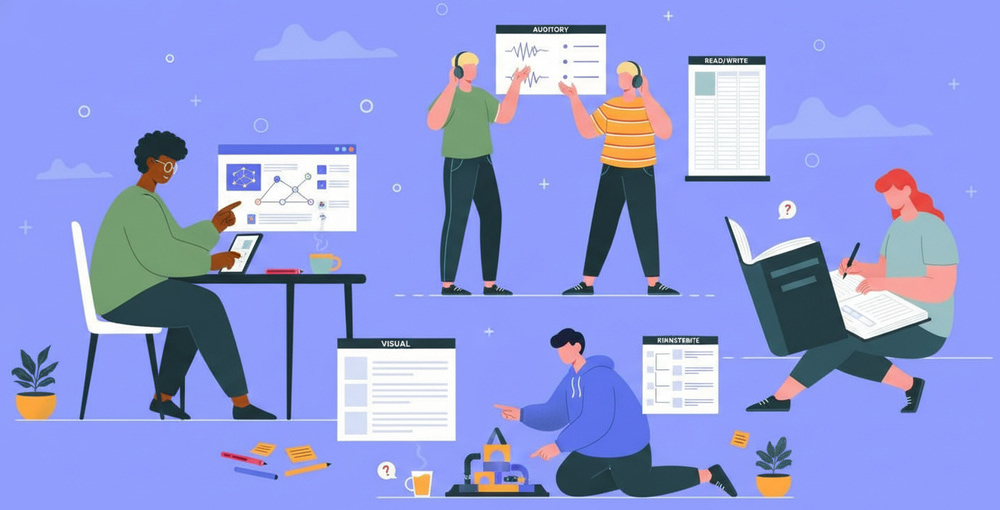
Understanding how you absorb, process, and recall information can transform the way you study, teach, and collaborate. A learning style tool shines a light on your preferences, revealing whether visuals, audio cues, text, movement, or social interaction best unlock comprehension. Rather than forcing everyone into one method, it encourages adaptive strategies that honor cognitive diversity and personal strengths. When used responsibly, this approach reduces frustration, bolsters confidence, and elevates outcomes across classrooms, workplaces, and self‑directed learning.
These instruments do more than generate a label; they provide a structured reflection that clarifies what works in the real world. For many learners, a learning style assessment free option removes barriers while delivering actionable insight that can be applied immediately to study plans and lesson designs. By naming specific techniques that fit your profile, the process highlights how to optimize note‑taking, time management, memory tactics, and review routines. It’s a springboard for experimentation, empowering you to try targeted techniques and measure their impact over time.
It’s also important to recognize the nuance: preferences can shift by subject, task complexity, and environment. A person might prefer diagrams for statistics yet lean on discussion for ethics. That variability is not a flaw; it’s a signal to personalize choices with flexibility. Use insights as a compass rather than a cage, and combine them with evidence‑based practices such as spaced repetition, retrieval practice, interleaving, and metacognitive check‑ins to sustain momentum.
Core Benefits for Students, Educators, and Teams
Clarity about your learning profile creates immediate advantages. Students gain a practical vocabulary to describe what helps them thrive, and teachers receive a map for differentiation without reinventing the wheel. Teams benefit as well, translating preferences into meeting designs and knowledge‑sharing rituals that make information stick. When people feel seen, they engage more fully, and that engagement becomes the engine of durable understanding.
Cost should never block insight, especially when quick action can enhance grades, certifications, and workplace training. When budgets are tight, a free learning style assessment lowers the threshold for equitable access and enables rapid experimentation with low risk. Small tweaks, like adding annotated visuals, layering short audio summaries, or inviting kinesthetic breaks, often yield outsized gains. The key is to iterate thoughtfully, monitor performance, and keep a record of what reliably moves the needle for you or your learners.
- Boost self‑efficacy by aligning strategies with innate preferences.
- Accelerate onboarding and training with tailored content formats.
- Enhance inclusivity by offering multiple pathways to mastery.
- Reduce cognitive load through clearer structure and modality fit.
- Strengthen memory with multimodal reinforcement and retrieval cues.
How to Take and Interpret Results Effectively
Approach any instrument with curiosity and a willingness to test ideas in the wild. Before starting, decide what you want to improve, note‑taking, reading speed, problem‑solving, or recall. After you complete the questionnaire, reflect on the recommendations and choose two tactics to implement right away. Then set a short feedback loop: track outcomes for one or two weeks and refine your approach based on what demonstrably works.
Convenience matters, but follow‑through matters more, so pair practicality with reflection. You can begin with a free online learning style assessment and then validate findings through journaling, peer feedback, and small experiments in different subjects. Treat the result as a hypothesis about your preferences, not a diagnosis carved in stone. If a suggestion feels off, adjust the variables, duration, complexity, or modality, and try again with a lighter or heavier touch.
| Signal You Notice | What It Might Mean | Try This First |
|---|---|---|
| You recall diagrams better than paragraphs | Visual pathways may be especially efficient | Use sketch‑notes, mind maps, color‑coding, and captioned charts |
| Listening helps ideas “click” quickly | Auditory cues may anchor understanding | Add brief audio summaries, read notes aloud, and discuss concepts |
| Movement keeps you alert and focused | Kinesthetic engagement boosts attention | Study in intervals with stretch breaks, manipulatives, or walk‑and‑talks |
| You learn faster by teaching others | Social processing enhances retention | Form study pods, explain ideas, and use peer‑review checklists |
As you experiment, blend modalities to reduce monotony and strengthen memory traces. For example, convert dense text into a one‑page diagram, narrate that diagram out loud, and teach it to a partner. Finally, close the loop with retrieval practice, short quizzes or flashcards, so you confirm not just familiarity, but true recall under time constraints.
Comparing Popular Frameworks and Evidence‑informed Use
Multiple frameworks exist, with overlapping categories and vocabulary. Some emphasize sensory channels, while others spotlight experiential cycles or environmental preferences. The best approach is pragmatic: use categories as prompts to test techniques, not as strict identities. Combine preference data with proven study science, and let performance metrics guide whether a tactic stays or goes. Iteration beats ideology, especially when stakes are high.
Many learners appreciate concise questionnaires that translate to concrete tactics in minutes. For reflective exploration, a free learning style self assessment can surface patterns you might otherwise miss during busy weeks. More comprehensive models can be useful too, provided you convert insights into specific actions like reformatting notes, chunking information, or layering modalities. Over time, patterns emerge, revealing when to lean on visuals, when to discuss, and when to move while thinking.
Remember that context shapes effectiveness. Difficult material may require slower pacing and richer multimodal scaffolds, while familiar topics benefit from fast cycles and retrieval practice. Track your outcomes with a simple dashboard, accuracy, speed, confidence, and adjust the mix. Ultimately, the winning formula is personalized, evidence‑aware, and relentlessly practical.
From Insight to Action: Study Plans and Teaching Moves
Turning a profile into results demands purposeful design. Start with your goal, identify the hardest steps, and retrofit those steps with techniques that play to your strengths. If focus slips during reading, inject structure with purpose questions and margin cues. If conceptual links feel hazy, turn relationships into diagrams or analogies, then test your recall without notes. Keep the cycle short so you can observe gains quickly.
When you’re coordinating a class or study group, layered delivery ensures no one is left behind. A quick audit using a free assessment of learning styles can inform choices like offering transcripts with videos, printable outlines alongside slides, and hands‑on labs after demos. Provide multiple submission formats for projects, and aim for clarity over complexity. The goal is not to create busywork, but to remove friction between the learner and the idea.
- Design sessions with a visible roadmap and clear checkpoints.
- Use spaced and interleaved practice to fortify retention.
- Invite micro‑teaching so learners explain ideas to peers.
- Offer templates for note‑taking, problem‑solving, and summaries.
- Measure what matters and retire tactics that don’t move results.
FAQ: Common Questions About Free Learning Style Tools
Learners and educators often share similar questions when getting started, especially about reliability, access, and practical use. The answers below distill best practices so you can move from curiosity to results without unnecessary detours. Use them as a launchpad for experimentation, and refine your plan as evidence accumulates.
How accurate are these assessments?
They are most useful as reflection tools rather than definitive measurements. Use the results to propose experiments, and keep what demonstrably improves comprehension, recall, or speed over time.
Where can I find a trustworthy test?
Look for instruments with clear instructions, transparent scoring, and concrete study suggestions aligned to each profile. Many learners start with a simple free learning style assessment test and then validate the suggestions through journaling, quizzes, and peer feedback.
How should I apply the results in daily study?
Pick two tactics, implement them for a week, and compare outcomes against your baseline. If they help, keep them and add one more tactic; if not, adjust the modality or switch to a different technique.
Do these tools work with experiential learning models?
Absolutely, especially when you connect preferences to concrete stages like experiencing, reflecting, conceptualizing, and experimenting. Learners who resonate with that cycle may appreciate starting with a free online Kolb learning style assessment and then mapping outcomes to hands‑on projects and rapid feedback loops.
Can teachers use the data to differentiate instruction?
Yes, and the most effective approach is to offer layered options rather than separate tracks. Provide multiple representations, invite choice, and monitor class performance to refine what delivers the biggest learning gains.